7.01.2024

Buffalo Bill Center II

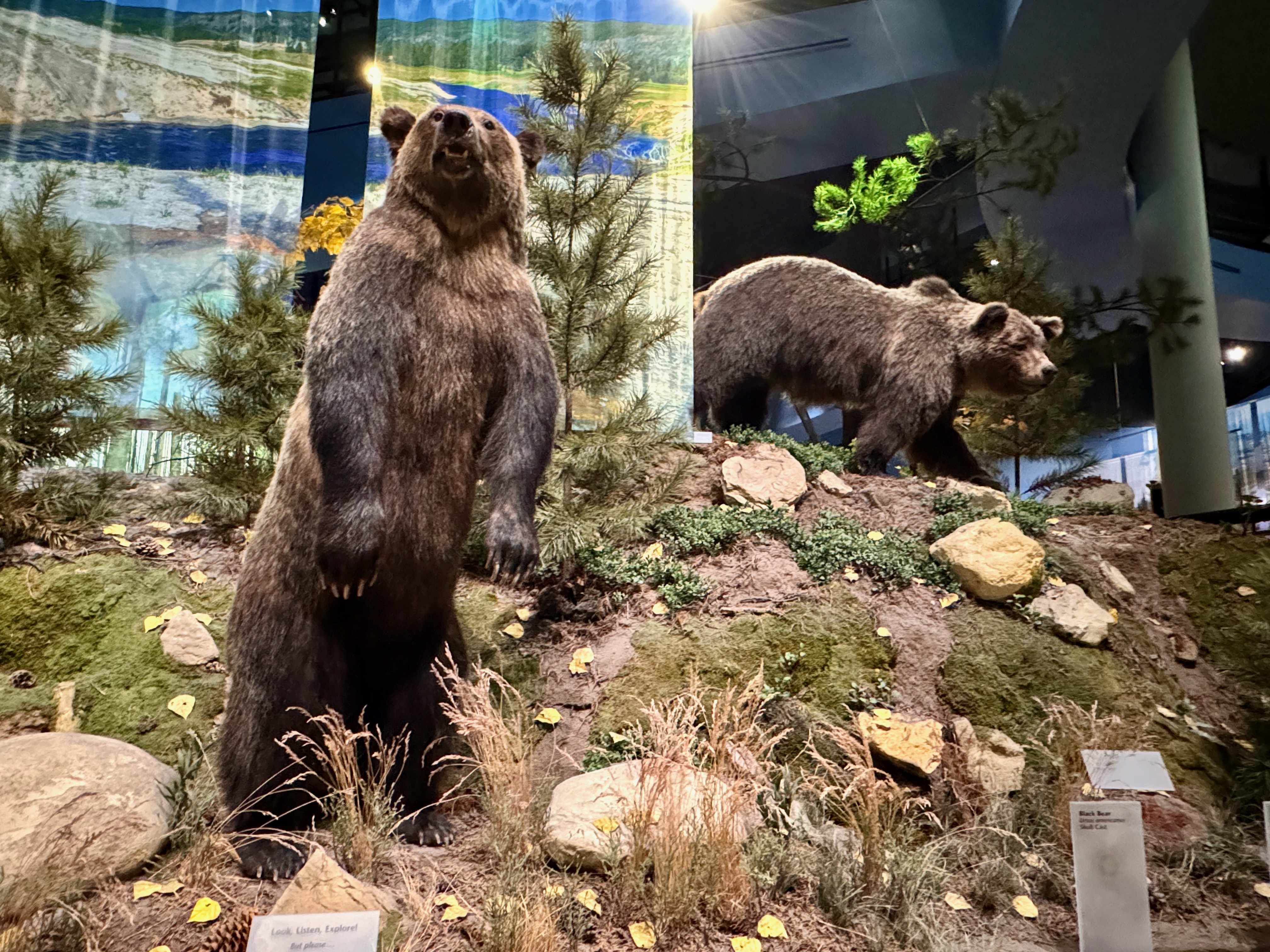
The Draper Museum of Natural History portrays the natural world as it appeared to early inhabitants and explorers. Trailing down a circular walkway from the alpine tundra to the plains, one hears the far-off cry of the wolf, the crackle of a forest fire, or a gust of wind whisking the pine trees.  

You enter this excellent exhibit at the alpine level and then
descend down through the biomes


Yellow Belled Marmot

Fox

Grizzly Bear and Wolverine 

Wolf

Grizzly cub and Great Gray Owl

Moose

Grizzly Bears

River Otter

Greater Sage Grouse

Simulated buffalo jump

Simulated archeological dig


Elk

Wolfs

Cougar

6.24.2024

Buffalo Bill Center of the West

 The Plains Indian Museum in Cody, Wyoming is one of five museums at the Buffalo Bill Center of the West. This Native American museum explores the lives of Plains Indian peoples, cultures and traditions over hundreds of years.


A bear claw necklace isa symbol of power to be worn by a respected leader. 
The claws represent the bear's strength and courage while the 
otter fur signifies power over both land and water. 

Sioux 1870

Breastplate 1880


Lakota girl's dress 1885

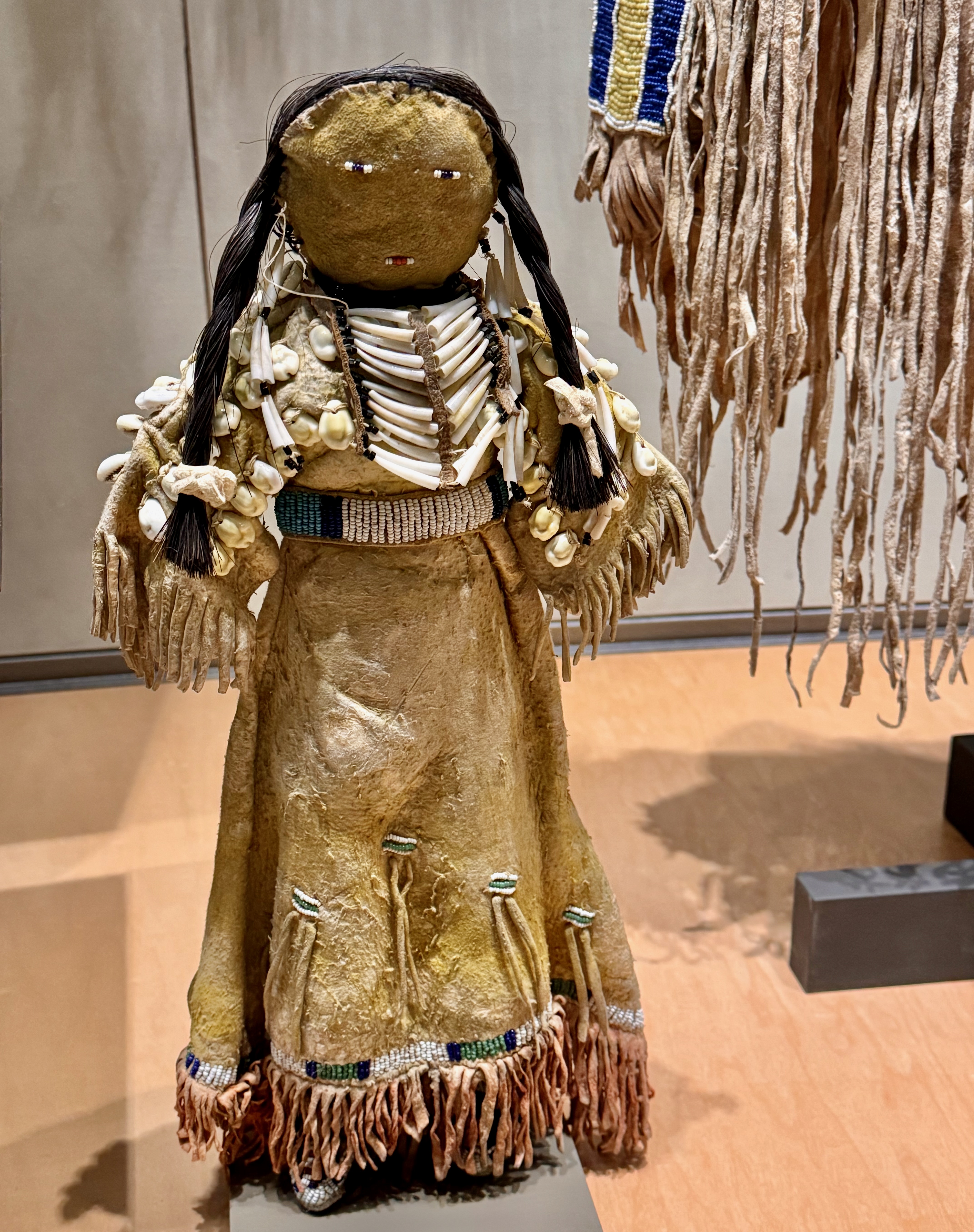
Lakota doll  1890


Dogs were essential to maintaining the seasonal rounds before horses arrived on the plains. 
On a travois, a large dog could carry a load of about 75 pounds of family belongings.
Dogs continued to carry lighter loads even after horses arrived on the plains.


Lakota Dance Shield 1890

Crow dress with elks teeth 1890


McClellan Saddle, originally a calvary saddle is appropriated 
into a decidedly Arapaho work of art.  1997

Traveling Medicine Doll Crow 2008

6.18.2024

Washakie Museum

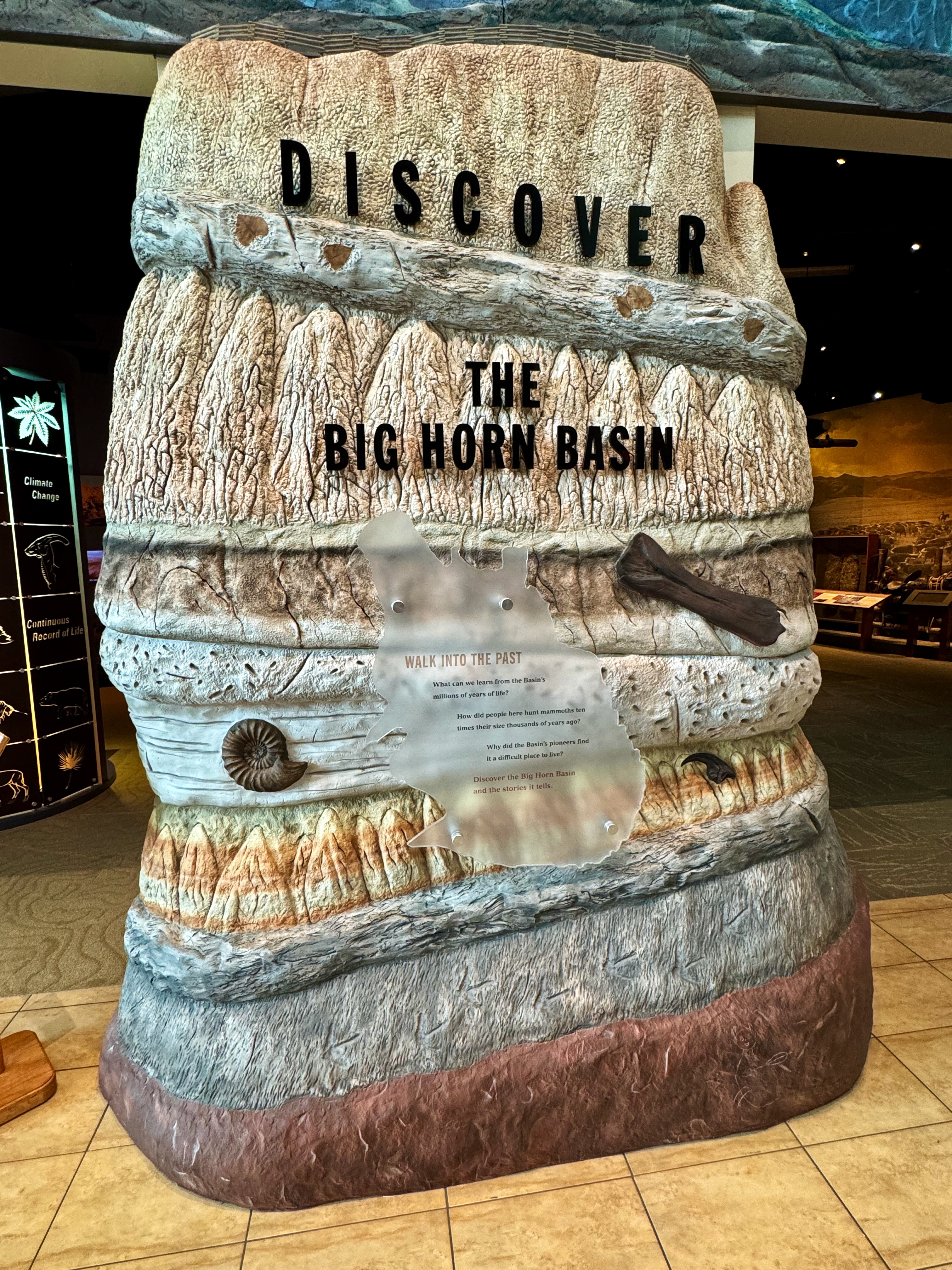
The Washakie is a delightful and informative museum in Worland, WY  


Deinonychus was discovered in 1960s by John Ostrom. 
He theorized the revolutionary idea that dinosaurs were related to modern birds.

What a large beak you have

Leaping forward in time. The indigenous natives hunted 
the mammoth and other large mammals after the last ice age.

Bones found at the kill sites

The atlatl was important in the natives pursuit of large mammals.
The atlatl makes the thrower's arm longer and greatly increases 
the speed of the dart.


 Atlatls were extensively used into the 
12th century when bows started to appear


This guy pops up and tells you the history of settlement in the area

What you would find in the kitchen

and in the closet

After the civil war large cattle operations moved into the Big Horn Basin. 1980s saw the arrival of small ranchers and conflict ensued between the two.  They overstocked the Basin's ranges, and their bottom lines suffered after the winter of 1886-1887. This was followed by the introduction of sheep. Sheepherders took pride in their work, but cattle ranchers did not like the intruders.

Sheepherder's wagon


Shearing demanded skill and strength. An expert fleecer could sheer 100 sheep a day; it took weeks to clip an entire flock. In 1905 W.T. Hogg and Company sheared 20,000 sheep: 14 men worked for more than two weeks to accomplish the task, each earning nine cents per ewe.

One needs a strong grip to work these. 

Wool going to market.