Perched at the northern tip of Michigan’s Lower Peninsula, Fort Michilimackinac was a vital 18th-century French—and later British—fort and fur trading post at the strategic Straits of Mackinac. Originally constructed by the French around 1715, it served as a bustling center of commerce, diplomacy, and military activity until its abandonment in 1783. Tensions flared after the British took control, particularly when they ended the French tradition of giving annual gifts to local Native tribes. On June 2, 1763, amid the broader uprising known as Pontiac’s War, a group of Ojibwe staged a game of baaga'adowe (an early version of lacrosse) outside the fort. The match served as a clever ruse to gain entry—once inside, they attacked and killed most of the British garrison. The Ojibwe held the fort for nearly a year, relinquishing it only after the British agreed to reinstate and enhance their gift-giving practices to maintain peace with the region’s Indigenous peoples.
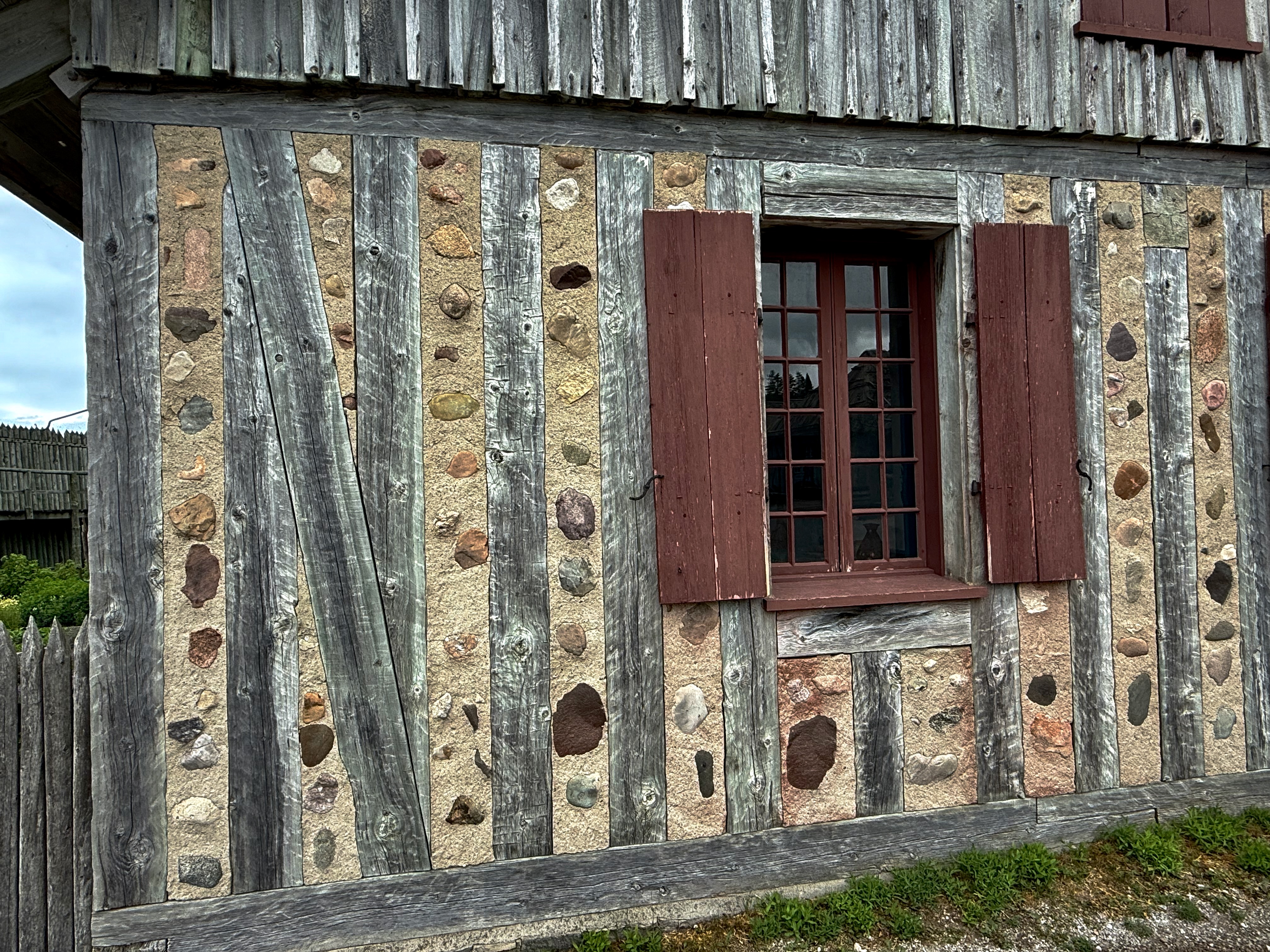
Today, Fort Michilimackinac is a meticulously reconstructed historic site, brought to life through more than 60 years of archaeological excavation and research. As you walk through the palisade gates, you're transported to the year 1775, on the brink of the American Revolution.
Explore the bustling fur trade village, watch live cannon and musket demonstrations, and engage with historical interpreters portraying British soldiers, voyageurs, and French-Canadian families. These reenactors don authentic period attire and share stories, skills, and daily routines from a time when cultures converged and history was made at the edge of the Great Lakes.
Watching the film on the fort's history
Guard house
The trader’s homes doubled as warehouses and offices, these British traders also imported furniture, fine ceramics and glassware, and other luxury items with which to decorate their homes.
Typical trade goods
The Priest's house
Door to the cellar
The roofing material is tree bark
This young lady in a merchant's house is mixing cake
batter which she will bake in a dutch oven in the fire place
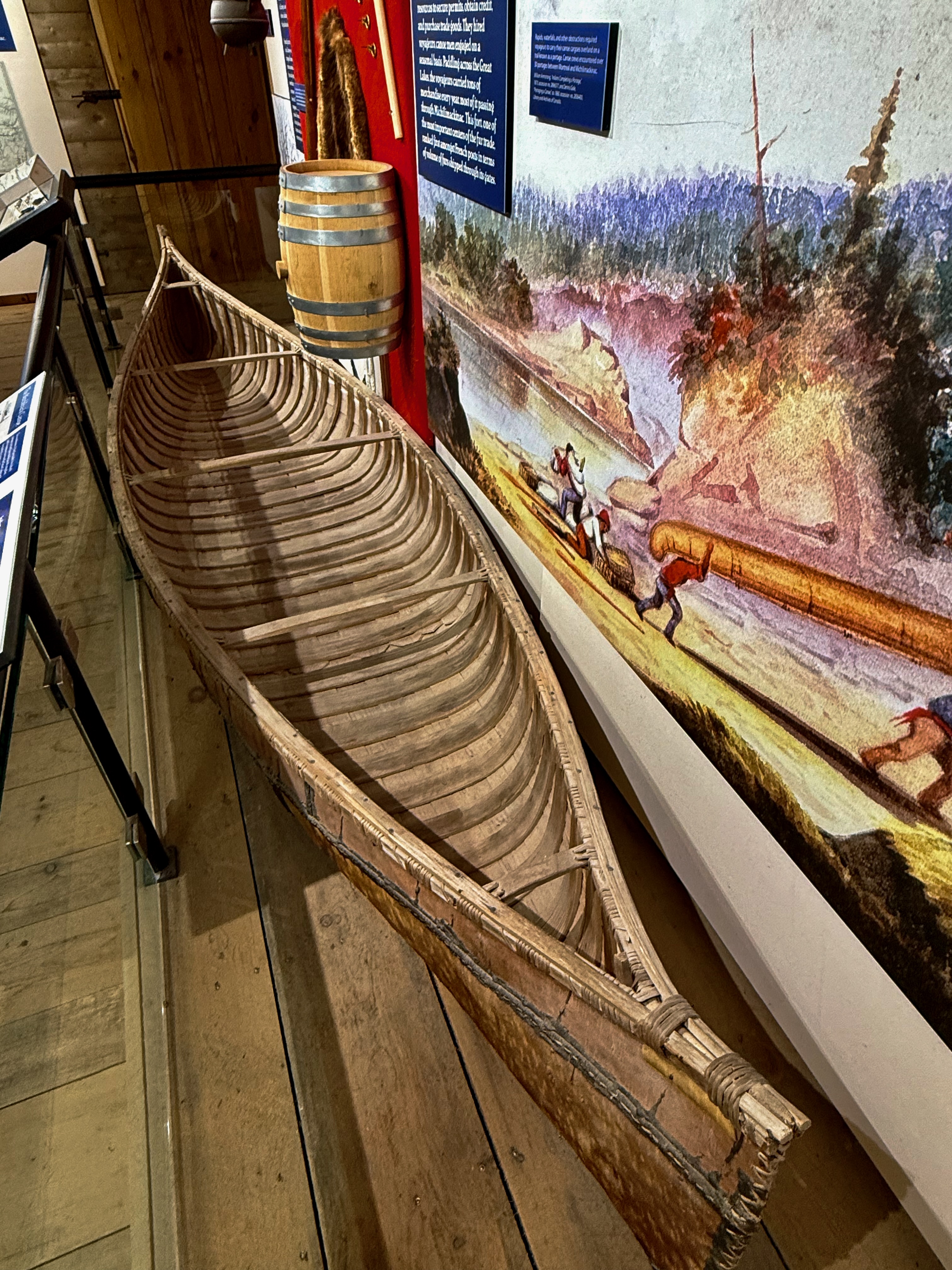
Light, agile, and remarkably durable, birchbark canoes were the essential vessels of the fur trade era, gliding silently across the vast inland waterways of the Great Lakes. Crafted by Indigenous peoples using birch bark, cedar frames, and spruce roots, these canoes were perfectly suited for navigating both open waters and narrow rivers. Their lightweight construction allowed voyageurs and traders to easily portage them between waterways, making them ideal for transporting trade goods, supplies, and valuable bundles of fur across immense distances.
That is an amazing 4 tons of material in the large Montreal canoe
When the British troops abandoned Fort Michilimackinac for the safety of Mackinac Island in 181 they burned all remaining structures. Very little of the original fort survived. As flames consumed the power magazine, the earthen roof collapsed extinguishing the fire. The charred and buried ruin remained well preserved until 1975 when archaeologists began to unearth this hidden treasure.
Every summer archeologists uncover more the fort's treasures
Some of the thousands of artifacts uncovered here.
Lt. Clowes' home
The comander's house
Rank has its privileges.
The parlor was the heart of social life in the home—a space reserved for receiving guests, sharing news, and marking life’s important moments.
The bedchamber
The kitchen
A must see site if you are ever in the area.


.jpeg)